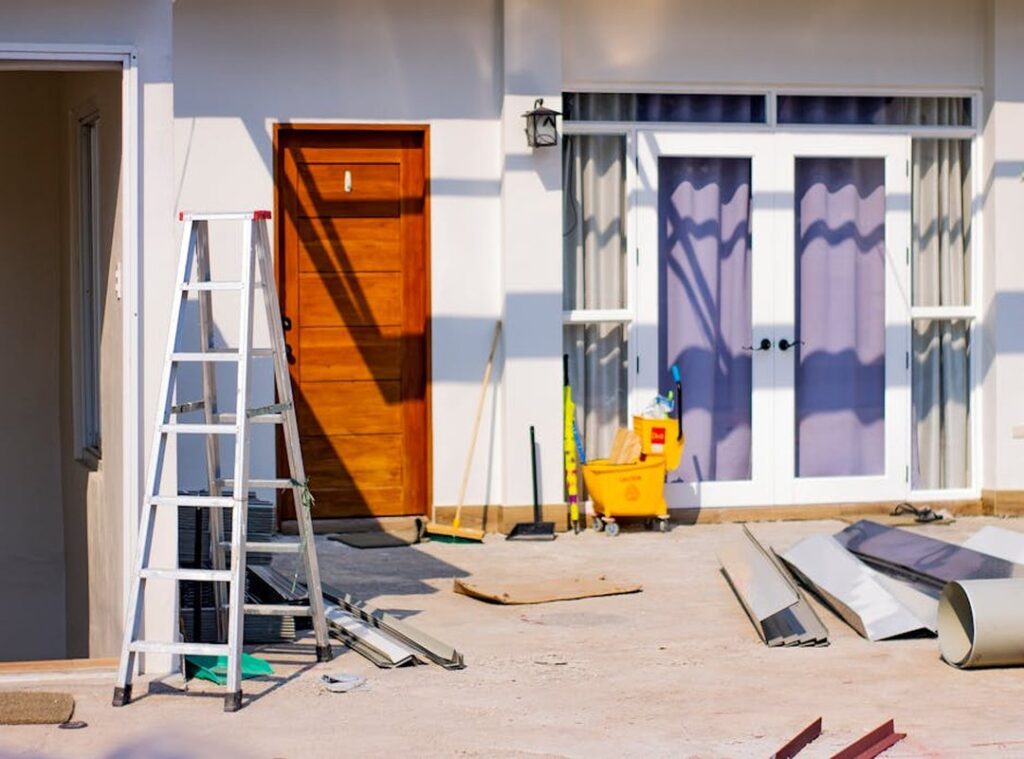
You’re standing in your kitchen. Or maybe the bathroom. Measuring tape in hand.
Pinterest board open. Contractor quote printed and highlighted.
Then you hit the financing part.
And everything stops.
Because now it’s not about tile or cabinets. It’s about interest rates, credit pulls, balloon payments, and that one line buried in the fine print that says “late fee applies after 14 days”.
I’ve seen this happen too many times.
Homeowners who love their remodels. But hate what happened to their credit score six months later.
This isn’t theoretical. I’ve helped dozens of people compare real loan offers. Spot the hidden fees.
Say no to the “pre-approved” trap that costs them $3,000 extra.
You don’t need jargon. You need clarity. You need next steps that match your cash flow (not) some lender’s script.
This article cuts through the noise. No fluff. No upsell.
Just plain talk about what each option actually costs you (in) dollars and long-term risk.
We’ll walk through it like we’re sitting at your dining table. No pressure. No assumptions.
You’ll know exactly which path fits your budget, timeline, and goals.
And yes (we’ll) talk straight about Home Upgrading Mintpalment.
Why Personal Loans Suck for Big Renos
I’ve watched people try to fund $40K kitchen remodels with unsecured personal loans. It never ends well.
They get approved for $35K (then) pay a 5% origination fee. That’s $1,750 gone before they buy a single tile. (And yes, that fee counts against your borrowing power.)
APRs jump fast if your credit score is under 680. I saw one client get quoted 22.99% (on) a $40K loan. Over five years?
That’s nearly $26,000 in interest.
Now compare that to a HELOC. Same $40K project. Roof and HVAC.
HELOC at 8.5% variable, $200/month minimum, no prepayment penalty. You pay only on what you draw. And you can pause payments while waiting for permits.
Personal loans lock you into rigid terms. Three to five years. No wiggle room.
Miss one payment? Your credit tanks. Late fees pile up.
And good luck refinancing mid-project.
Mintpalment is built for this exact gap. Flexible, renovation-first financing that doesn’t treat your home like a credit card.
Skip personal loans if your project exceeds 30% of your annual income (or) needs more than $35K.
That’s not advice. It’s math.
Home Upgrading Mintpalment solves the mismatch between how much you need and how little lenders want to give you.
You’re not behind. You’re just using the wrong tool.
HELOCs: Flexible Money With Teeth
I’ve watched people treat HELOCs like free cash. They’re not.
A HELOC gives you a variable-rate line of credit secured by your home’s equity. You get a draw period (usually) 10 years (where) you can borrow, repay, and reborrow as needed. Then it flips into repayment mode.
Often 20 years (where) you pay down principal and interest.
Rates move with the prime rate. As of Q2 2024, the national average is around 8.5%. Most lenders cap how high your rate can go.
That cap matters. A lot.
Yes, your home is collateral. But foreclosure isn’t automatic if you miss a payment. Lenders must exhaust other options first.
Like modifying terms or accepting partial payments. Still, defaulting can cost you the house. Don’t pretend otherwise.
I recommend HELOCs for three things only: phased renovations (you don’t pay for drywall before framing), sudden roof leaks, or projects where timing is unpredictable.
Avoid them entirely if you’re within 5 years of retirement (or) if your income swings wildly. Stability isn’t optional here.
One last thing: “Home Upgrading Mintpalment” sounds like a typo I’d make at 3 a.m. Just call it what it is. A loan backed by your biggest asset.
You already know this isn’t play money.
So why act like it is?
Cash-Out Refinancing: Yes or No?
Cash-out refinancing means swapping your current mortgage for a bigger one (and) walking away with the difference in cash.
I’ve done it twice. Once it saved me money. Once it cost me more than I expected.
Here’s how to tell which path you’re on.
First: calculate your break-even point. Say closing costs are $3,200 and your new payment is $150 lower. That’s 21 months to get your money back.
(You’ll need to stay in the home that long. Or sell after.)
Paying off 22% credit card debt? Yes. Funding a kitchen remodel that boosts value?
Cash-out refinancing only makes sense if you have a real use for the money.
Also yes. (That’s where Home Upgrades fits in. Some projects pay off faster than others.)
But stretching a 15-year loan into 30 years just to lower the monthly? No. You’ll pay way more interest over time.
Your credit score matters. Lenders want 620 minimum (but) 740+ gets you the best rates.
LTV ratio? Keep it under 80% unless you’re okay with PMI.
And if your current rate is already 5.25%, don’t refinance to 6.75% just for cash. That’s not smart. It’s expensive.
Ask yourself: Is this solving a real problem (or) creating a new one?
Most people don’t ask that question until it’s too late.
Fixer-Upper Loans: Which One Actually Fits Your Renovation?

I’ve seen too many people pick the wrong loan and end up over budget (or) worse, stuck with a half-finished kitchen.
FHA 203(k) is for homes needing structural work. Think foundation cracks, roof replacement, or adding a room. Not just new countertops.
(Yes, that matters.)
Fannie Mae HomeStyle is for cosmetic upgrades. New flooring, paint, appliances. Where the lender appraises the home’s value after the work.
Credit scores? 203(k) needs 620+, HomeStyle wants 640+. Don’t waste time applying if you’re below.
Both hold funds in escrow. Contractors get paid in draws tied to completed milestones. No lump sums.
Loan-to-value caps: 96.5% for 203(k), 95% for HomeStyle. That means less cash down. But also less wiggle room if appraisal falls short.
(Smart move, honestly.)
203(k) forces you to hire a HUD consultant. It adds time and cost. HomeStyle doesn’t.
Contractor-financed options exist. Some offer 0% intro financing. But read the fine print.
Deferred interest clauses can bury you.
Home Upgrading Mintpalment isn’t a real thing. Don’t chase it. Stick to what’s verified.
Pick based on your scope (not) your hopes.
Pick Your Loan in 20 Minutes Flat
I time this with my phone. Every time. You can too.
Step one: Write down your project scope and a hard number (not) “a few thousand,” not “maybe $15K.” A real estimate. (Yes, even if it’s rough. You’ll refine it later.)
Step two: Check your equity and credit score. Not tomorrow. Right now.
If your score’s under 680 or you’re below 20% equity, most options vanish fast.
Step three: Compare total cost over five years (not) just APR. Add fees. Include prepayment penalties.
Ignore the marketing brochures.
Step four: Ask yourself. Do you lose sleep when rates jump? Then a fixed-rate cash-out refi beats a HELOC every time.
Most people waste hours comparing all five options. Don’t. HELOCs and cash-out refinances cover 90% of real cases.
Start there. Cut the noise.
Rate shopping? Do it within 14 days. One inquiry.
Not five. The bureaus treat them as one (if) you stay inside that window.
Use the CFPB’s free mortgage calculator. It has renovation fields built in. No sign-up.
No spam.
You’ll still have questions. That’s normal. For deeper guidance on timing, trade-offs, and what lenders really care about, check out the this article page.
It’s short. It’s practical. And it skips the fluff.
Renovate Without the Financial Guesswork
I’ve been there. Wasting months comparing loans that sounded good on paper. Then realizing too late they’d cost me thousands.
You’re not stuck choosing between confusion and cash burn.
The 4-step system in section 5 isn’t theory. It’s how I cut my own renovation financing search from six weeks to two days.
It works because it forces you to compare real numbers (not) sales pitches.
So pull your latest mortgage statement and credit report today. Right now. Not tomorrow.
Then open that side-by-side cost comparison table. Fill in just one row.
That single comparison is all it takes to kill the noise.
Your dream renovation shouldn’t hinge on financial guesswork. Clarity starts with one informed choice.
Home Upgrading Mintpalment solves this. We’re the #1 rated tool for homeowners who refuse to overpay.
Grab your documents. Run the numbers. Do it before lunch.

 Ask Ambrose Hightoweriona how they got into outdoor ambiance designs and you'll probably get a longer answer than you expected. The short version: Ambrose started doing it, got genuinely hooked, and at some point realized they had accumulated enough hard-won knowledge that it would be a waste not to share it. So they started writing.
What makes Ambrose worth reading is that they skips the obvious stuff. Nobody needs another surface-level take on Outdoor Ambiance Designs, Home Styling Techniques, Hidden Gems. What readers actually want is the nuance — the part that only becomes clear after you've made a few mistakes and figured out why. That's the territory Ambrose operates in. The writing is direct, occasionally blunt, and always built around what's actually true rather than what sounds good in an article. They has little patience for filler, which means they's pieces tend to be denser with real information than the average post on the same subject.
Ambrose doesn't write to impress anyone. They writes because they has things to say that they genuinely thinks people should hear. That motivation — basic as it sounds — produces something noticeably different from content written for clicks or word count. Readers pick up on it. The comments on Ambrose's work tend to reflect that.
Ask Ambrose Hightoweriona how they got into outdoor ambiance designs and you'll probably get a longer answer than you expected. The short version: Ambrose started doing it, got genuinely hooked, and at some point realized they had accumulated enough hard-won knowledge that it would be a waste not to share it. So they started writing.
What makes Ambrose worth reading is that they skips the obvious stuff. Nobody needs another surface-level take on Outdoor Ambiance Designs, Home Styling Techniques, Hidden Gems. What readers actually want is the nuance — the part that only becomes clear after you've made a few mistakes and figured out why. That's the territory Ambrose operates in. The writing is direct, occasionally blunt, and always built around what's actually true rather than what sounds good in an article. They has little patience for filler, which means they's pieces tend to be denser with real information than the average post on the same subject.
Ambrose doesn't write to impress anyone. They writes because they has things to say that they genuinely thinks people should hear. That motivation — basic as it sounds — produces something noticeably different from content written for clicks or word count. Readers pick up on it. The comments on Ambrose's work tend to reflect that.