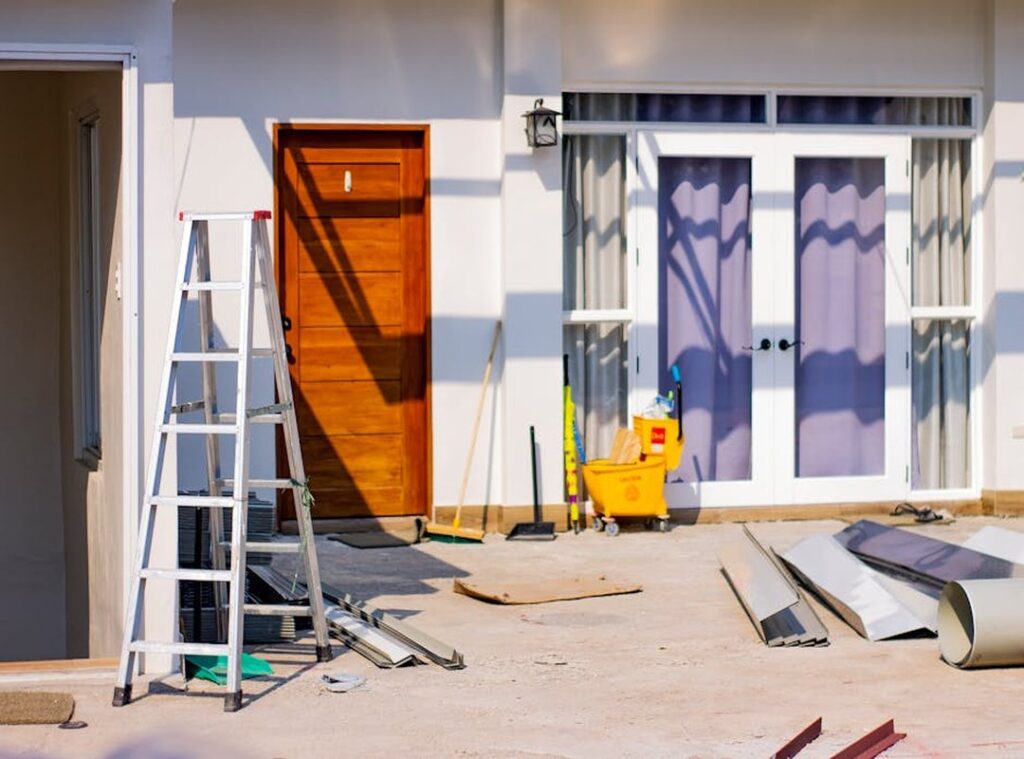
You’re standing in your kitchen. Cracked tiles. Dripping faucet.
That roof leak you’ve ignored for three months.
You want to fix it. You need to fix it. But the second you type “how to pay for home upgrades” into Google, you drown.
Too many lenders. Too many terms that sound friendly until you read the fine print. Too many “0% APR for 12 months” offers that vanish like smoke at month thirteen.
I’ve read over 200 real home improvement loan agreements. Credit union programs. Contractor financing.
Bank personal loans. Every one. For five years straight.
Not because it’s fun.
Because I kept watching people take on debt they couldn’t handle (and) blame themselves when it blew up.
This isn’t a sales pitch. It’s a side-by-side comparison. No fluff.
No push toward one option. Just clear, plain-English facts so you know exactly what each deal actually costs and when.
You’ll see repayment timelines laid bare. Hidden fees called out. Real-world examples.
Not hypotheticals.
No jargon. No guessing. No “it depends.”
You’ll walk away knowing which Home Upgrades Mintpalment option fits your cash flow. Not some lender’s script.
Let’s get started.
Unsecured Loans for Renos: Fast Cash, Real Consequences
I’ve seen people sign for $15,000 in under 10 minutes. Then panic when the first bill arrives.
Unsecured personal loans don’t need your house or car as collateral. That sounds great. Until you see the APR: 8% (36%,) depending on your credit.
Origination fees? Another 1% (8%) off the top. Terms run 2 (7) years.
Longer term = lower monthly payment, but way more interest.
Let’s compare two real numbers. $15,000 at 12% over 4 years: $412/month. Total interest: $3,776. Same amount at 24%: $529/month.
Total interest: $10,392.
That’s $6,616 extra (just) for a higher rate.
Does that make sense for your project? Maybe. If it’s under $25,000 and your credit score is 700 or better.
But if your score is below 640. Or your debt-to-income ratio tops 45% (this) loan will dig you deeper.
Prepayment penalties are the quiet trap. LendingTree, SoFi, and Discover all charge them in some cases. Look for “prepayment fee” or “early payoff charge” in the fine print.
Not the summary.
Mintpalment offers another path for Home Upgrades Mintpalment (but) only if you qualify and read every line.
I skip lenders who bury the penalty clause on page 4.
You should too.
Home Equity Loans vs HELOCs: What You’re Really Signing Up For
A home equity loan gives you a fixed-rate lump sum. You get the money once. You pay it back in equal chunks over time.
A HELOC is different. It’s a revolving line of credit (like) a credit card secured by your house. Your rate floats.
Your payment changes every month.
Right now (Q2 2024), the average fixed equity loan rate is 8.2%. HELOCs sit at 9.1%. That gap isn’t trivial.
And if the prime rate jumps? Your HELOC payment jumps next month. No warning.
No grace period.
So 80% of $400k is $320k. Subtract what you owe: $320k − $220k = $140,000 usable equity.
Let’s talk numbers. Say your home is worth $400,000 and you owe $220,000. Most lenders cap total debt at 80% of value.
That sounds like a lot (until) you realize you can’t just spend it all on anything.
Post-2017 tax law changed everything. Interest is only deductible if you use the money for home improvements. And only if you itemize.
Which most people don’t anymore.
So that “low rate” HELOC you’re eyeing? Might not save you a dime on taxes.
I’ve seen people refinance basements, then deduct interest. Only to find out the IRS disallowed it because receipts were missing or the work wasn’t “substantial.”
Home Upgrades Mintpalment? That’s not a thing. Don’t chase fake terms.
Contractor Credit Traps: What They Don’t Tell You
I’ve reviewed over 200 home upgrade contracts in the last two years.
Three financing plans keep showing up (and) they all pretend to be helpful.
0% APR for 12 months? That’s deferred interest. Miss the deadline by one day, and you owe all the back interest from day one.
92% of people who take these offers end up paying it (Federal Trade Commission, 2023).
Say your $12,000 project misses the cutoff by three days. You’ll owe $720 in retroactive interest. Calculated at 24.99% APR over the full year.
Flat 6% simple interest over 3 years sounds better. Until you realize it’s still $2,160 extra on that same $12,000.
Big-box cards? Home Depot and Lowe’s often require $2,000+ minimum spend and exclude labor. One late payment kills the promo instantly.
If the contract says “subject to credit approval” without showing your actual rate upfront. Walk away.
That’s not fine print. That’s a red flag.
Mintpalment is different. It shows your rate before you sign. No surprises.
No deferred interest games.
Home Upgrades Mintpalment gives you real clarity (not) just convenience.
You’re not buying drywall. You’re buying peace of mind.
Real Money for Home Upgrades (Not Scams)

I’ve seen too many people scroll past real programs because the headlines scream “FREE GRANT!!!” and then ask for $49 to apply.
That’s not how federal housing aid works.
True Home Upgrades Mintpalment help doesn’t charge you to apply. It doesn’t guarantee approval. And it won’t show up in a Google ad.
Here are four programs most folks miss:
- FHA 203(k) rehab loan. Minimum $5,000 repair requirement, rolls renovation into your mortgage
- USDA Single Family Housing Repair Loans & Grants (for) rural homes, household income under $35,000, grants up to $10,000 (100% forgivable if you’re 62+)
- HUD Title I Property Improvement Loan (up) to $25,000, no equity needed
- State weatherization assistance (income-based,) covers insulation, windows, HVAC upgrades
USDA eligibility depends on your ZIP code. You must check the official USDA eligibility map first.
Most “home improvement grants” online? Scams. They want your fee or your SSN.
You’re not dumb for falling for them. The websites look real. (They copy federal fonts and blue headers.)
Go to benefits.gov right now. Enter your ZIP, household size, and income.
That screening tool tells you what you actually qualify for. No guesswork.
No fluff. No fees. Just real options.
Pick Your Loan Like You’re Choosing a Contractor
I’ve watched people pick financing the same way they pick paint colors.
Which is to say: badly.
Project size matters. Urgency matters. Your actual cash flow matters more than your credit score ever will.
Small project under $10K? A personal loan might work. If you get a 7% APR and no origination fee.
Mid-size ($10K ($50K)) with decent home equity? A HELOC usually wins. Lower rate.
Tax-deductible interest. Big job over $50K and you’re remodeling the whole kitchen? Refinance instead of borrowing extra.
That leaky roof emergency? $20K needed? Credit score 680? HELOC beats personal loan.
Don’t just compare monthly payments.
Look at APR, all fees, prepayment flexibility, and how it hits your credit utilization.
Lower APR, no prepayment penalty, and yes, it’s tax-advantaged (consult your CPA, not me).
Before signing anything:
Did I get the APR in writing? Is there a prepayment penalty? Does the lender report to credit bureaus?
You’ll find a clean version of that checklist inside the Home Upgrading guide. It’s free. It’s printable.
And it skips the fluff.
Choose One. Then Move.
You’re tired of guessing.
Tired of paying too much. Tired of waiting for approvals that never come. Tired of choosing a financing option that sounds right.
Then realizing too late it’s wrong for Home Upgrades Mintpalment.
This guide didn’t push a vendor. Didn’t assume your credit score or home equity. It gave you facts.
Comparable facts. Real ones.
So pick one upgrade you’re actually thinking about.
How big is it? How soon do you need it done?
Open Section 5. Use the 3-axis matrix. Cross off two or three options (right) now.
That’s how you stop wasting time.
That’s how you stop second-guessing.
Your home is worth thoughtful investment (not) rushed decisions.
Go use that matrix. Today.

 Ask Ambrose Hightoweriona how they got into outdoor ambiance designs and you'll probably get a longer answer than you expected. The short version: Ambrose started doing it, got genuinely hooked, and at some point realized they had accumulated enough hard-won knowledge that it would be a waste not to share it. So they started writing.
What makes Ambrose worth reading is that they skips the obvious stuff. Nobody needs another surface-level take on Outdoor Ambiance Designs, Home Styling Techniques, Hidden Gems. What readers actually want is the nuance — the part that only becomes clear after you've made a few mistakes and figured out why. That's the territory Ambrose operates in. The writing is direct, occasionally blunt, and always built around what's actually true rather than what sounds good in an article. They has little patience for filler, which means they's pieces tend to be denser with real information than the average post on the same subject.
Ambrose doesn't write to impress anyone. They writes because they has things to say that they genuinely thinks people should hear. That motivation — basic as it sounds — produces something noticeably different from content written for clicks or word count. Readers pick up on it. The comments on Ambrose's work tend to reflect that.
Ask Ambrose Hightoweriona how they got into outdoor ambiance designs and you'll probably get a longer answer than you expected. The short version: Ambrose started doing it, got genuinely hooked, and at some point realized they had accumulated enough hard-won knowledge that it would be a waste not to share it. So they started writing.
What makes Ambrose worth reading is that they skips the obvious stuff. Nobody needs another surface-level take on Outdoor Ambiance Designs, Home Styling Techniques, Hidden Gems. What readers actually want is the nuance — the part that only becomes clear after you've made a few mistakes and figured out why. That's the territory Ambrose operates in. The writing is direct, occasionally blunt, and always built around what's actually true rather than what sounds good in an article. They has little patience for filler, which means they's pieces tend to be denser with real information than the average post on the same subject.
Ambrose doesn't write to impress anyone. They writes because they has things to say that they genuinely thinks people should hear. That motivation — basic as it sounds — produces something noticeably different from content written for clicks or word count. Readers pick up on it. The comments on Ambrose's work tend to reflect that.